


We've produced over 32 metric tonnes of maple syrup at Purple Woods over the past 50 years. And we're still going strong!
- Feb 18
- 5 min read
Updated: Feb 23

Since 1975, we've produced over 24,000 litres of maple syrup from the maple trees at Purple Woods Conservation Area. That's equivalent to 32 metric tonnes (equivalent to the weight of six African elephants). It takes 964,000 litres of raw sap to make that much of this liquid gold. And it's worth it! Not only does it taste incredible, but it's good for you, too. A 60 ml portion of maple syrup contains antioxidant levels that are comparable to a banana or a serving of broccoli!
The flow of maple sap signals the Earth’s reawakening after the long winter rest. Since time immemorial, maple trees and their gifts have carried deep cultural and spiritual significance for First Nations Peoples, a significance that continues to this day. First Peoples have long understood the gifts of the maple tree, harvesting its slightly sweet sap to make maple sugar. This first food of spring was important for survival, serving as both nourishment and medicine. For the Anishinaabe (Ojibwe), ziigwan, or ‘early spring’, is a season of gratitude that coincides with the maple sap harvest. Traditionally, communities would gather in the sugar bush to give thanks, celebrating the new season and the renewal of life. Among the Kanyen’kehá:ka (Mohawk), Wáhta— the sugar maple—is honoured as the leader of all trees in the natural world. To respect the deep connection between people, the land, and the trees that sustain us, we plant and protect sugar maples for seven generations into the future.
Historically, maple sap was collected by First Nations Peoples by making cuts in the bark of maple trees. Wooden slats were used to guide the sap into birch bark containers. The sap was then heated in clay or metal pots over an open fire, allowing the water to evaporate and leaving maple sugar behind. The sugar was stored in birch bark containers or leather pouches for use throughout the year. Today, many First Nations communities continue to harvest maple sap using both traditional and modern methods, maintaining this important cultural practice while sharing their knowledge with future generations.
For Central Lake Ontario Conservation Authority (CLOCA), sap collection and pancake breakfasts at Purple Woods Conservation Area began in the spring of 1975. Pancakes were served over one weekend, and staff recall, “It was a crazy weekend and extremely popular!” At that time, sap was collected in buckets and lugged by hand to an open-air evaporator. Over the next two years (1976-1977), the Sugar Shack, Picnic Shelter, and Maple Store were added to the bottom of the Sugar Shack Trail at Purple Woods Conservation Area to support expanded maple syrup festivities.

In 1977, CLOCA officially opened to the public during maple syrup season and hosted education groups for maple syrup demonstrations. Then Director of Education of the Durham District School Board (K.D. Munroe) wrote, “The Maple Sugar Program at Purple Woods was an incredible success, accommodating over 400 pupils from over five of our schools!”

Students on school trips to Purple Woods Conservation Area would often disembark the bus, seeking ‘purple trees’. ‘Purple Woods’ is an ode to the way the sun would reflect off the smooth, light grey bark of the beech trees, creating a purple cast in the morning sun. There were once many large beech trees growing alongside the sugar maples in this 150-year-old forest. Positioned high on the top of the Oak Ridges Moraine, one could see this forest from miles away, and enjoy its morning ‘glow’. Eventually, these woods became known as Purple Woods. Unfortunately, a well-travelled aphid (scale) fungus has taken the ‘purple’ out of these woods by munching the inner bark of the beech trees. Now, visitors will see lots of beech stumps and a few beech trees still standing with distorted, orc-like bark. The invasive beech bark disease is reserved for the largest of beech trees. In the winter and early spring, it is easy to spot the young beech trees at Purple Woods, as they hold onto their dead, light brown leaves, often until they grow new ones.


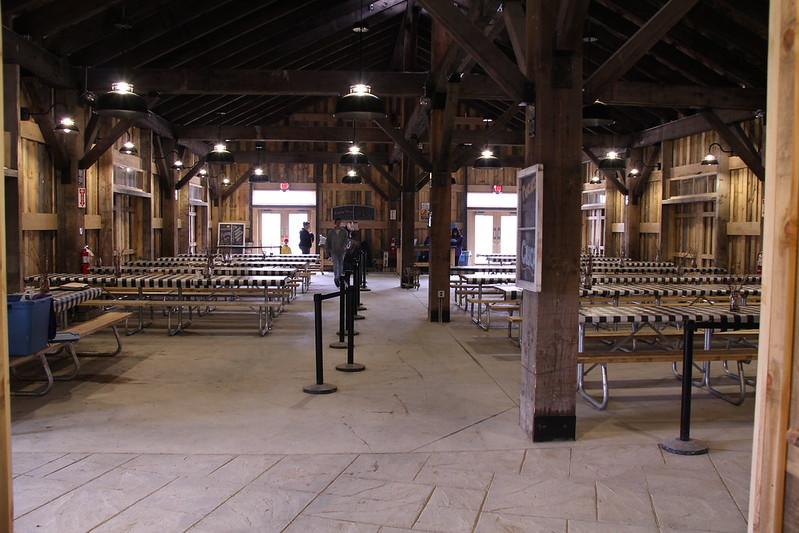
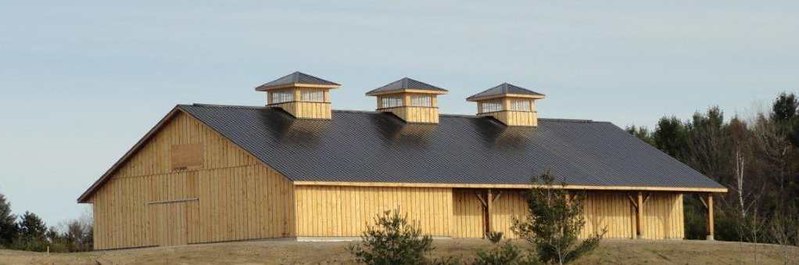
Between approximately 1980 and 2010, CLOCA used large tarps and event-style tents for shelter while making and serving pancake breakfasts to visitors. To the delight (and relief) of CLOCA staff, 2011 marked the start of construction of the Purple Woods Heritage Hall. Heritage Hall was built with reclaimed wood from a decommissioned airplane hangar to replace the tarps and tents used during maple syrup seasonand to create a natural meeting place that embraces the environment, located in a place accessible to the surrounding community. Equipped with rainwater harvesting technology for toilet plumbing, Heritage Hall is both aesthetically and environmentally suited to its location on the sensitive Oak Ridges Moraine. It is available for use as a rustic event space for environmental, agricultural, recreational, or outdoor appreciation-focused gatherings.


In 2012, state-of-the-art maple syrup production equipment was installed in the Sugar Shack, including a new evaporator, vacuum pump, stainless-steel sap storage tanks, and stainless-steel bottler and finishing bins. This new equipment facilitated sap pipeline expansion in all four directions from the Sugar Shack, located at the bottom of the Sugar Shack Trail. Between 2013 and 2022, maple syrup yields increased steadily, from an average of 200-300 litres (1975-2011) to approximately 1,000 litres (the record year was March 2019 at 1,358 litres).

In May 2022, the Derecho high-wind event toppled more than 60 mature sugar maple trees and damaged the sap-collection system. By 2024, CLOCA was back to tapping over 650 trees with 1,000 taps, producing approximately 1,000 litres of maple syrup (large sugar maples can easily handle more than one tap). Each tap yields about 40 litres of sap each spring, averaging about one litre of maple syrup per tap. Though the main sap lines remain installed all year, new holes are drilled every spring, and the taps are hammered into place just under the maple trees’ bark. The start of the maple syrup season depends on the weather, with production staff monitoring temperatures between 5-8 C and overnight freezing. Over the years, CLOCA has tapped as early as February 10th and as late as March 10th. In 2025, CLOCA celebrated ‘50 Years of Maple Syrup at Purple Woods Conservation Area’!
Now, every March, CLOCA welcomes up to 10,000 visitors to celebrate spring at the Purple Woods Maple Syrup Festival, including 2,000-2,500 elementary students for educational demonstrations. We hope you’ll join us this year! #PWMapleSyrupFest


Comments